
Polyculture
Polycultures are two or more useful plants grown on the same plot, usually at the same time.

Principles
-
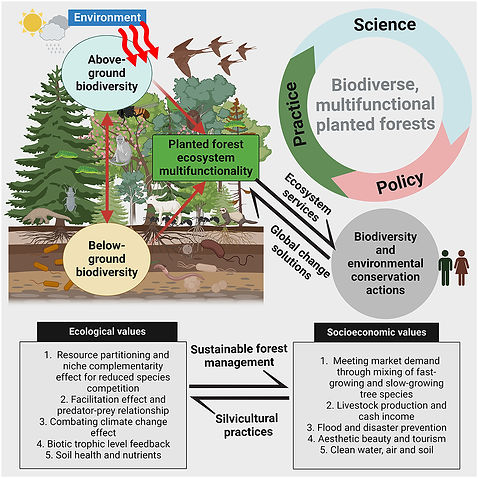
From an ecological perspective, they try to mimic natural cycles. Like natural systems, they offer benefits, including reduced pest damage and soil conservation, even increasing crop yields per area compared to monocultures.
-
Increased use of machinery and economies of scale have led to widespread use of monocultures (large fields of a single crop) but polycultures offer significant advantages over this approach by enhancing:
-
biodiversity
-
nutrient cycling
-
soil and water conservation
-
carbon sequestration
-

-
They can also help control pests and diseases and be more productive per land area than growing each crop alone.

There are several ways to grow polycultures:
-
The crop plants can be mixed (mixed cropping) or grown in single or multiple rows of each crop (row, or strip intercropping).
-
A second crop can also be planted amongst a first just before it is harvested (relay intercropping).
-
-
Row intercropping is popular in smaller gardens where many crop types are grown. At a farm scale, there are usually just two alternating crops.
-
Alley cropping, a type of agroforestry, is a form of polyculture where an annual crop is planted between rows of perennials like trees.
-
Companion planting is growing plants that help each other suppress weeds, improve soil fertility, deter pests, or attract beneficial insects. This is typically done on smaller scales like home gardens or small farms.


Biodiversity
Biodiversity is the variability of all forms of living organisms on Earth:
- Flora = plants and fungi
- Microflora = fungi and bacteria
- Fauna = animals
- Microfauna = microscopic animals
This includes the diversity of different species, within species, and across ecosystems. It is the genetic variations of plants, animals, microorganisms that create the complexity in the ecosystem.
Why is biodiversity necessary?
-
It is essential for all life on Earth.
-
Genetic diversity within a species aids against diseases, deformities, and environmental stressors.
-
Biodiversity creates the necessary components for life... plants absorb carbon dioxide and produce oxygen, animals breath oxygen and produce carbon dioxide. A tree produces a seed to reproduce and a bird eats the seeds and transports them, spreading the genetics of the tree, making more and so on.
Coppice

-
Coppicing is an ancient woodland management technique that was once used to ensure a regular supply of timber and firewood.
-
Dates to the Stone Age.
-

-
Coppicing also mimics a natural process where large mature trees fall due to old age or strong winds, allowing light to reach the woodland floor and giving other plant species the opportunity to thrive. This can start a chain of events that hugely increases the range of plants and wildlife in a woodland area.
